
Living the extra years
better healthcare gave us
How “old” are you? Do you feel “old”? The future’s very different from a half century ago … has that changed your thinking about “old age” someday?
It should!
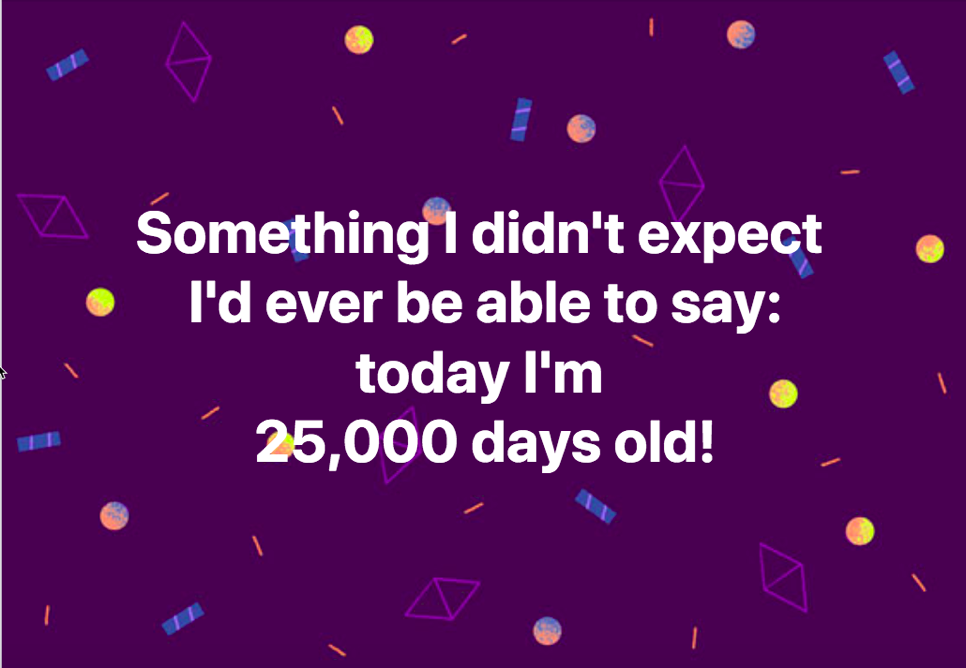
On average we all keep not dying as early as we used to, and who knows what to do with all this extra time?? Here’s a slide I used in a 2018 speech.
I call it “extra time”
Soccer (football) has a concept of extra time – if the game’s not over after the normal 90 minutes, you keep playing 30 more. My “extra time” isn’t the same – it’s not a specific length – but it feels right: in 2007 my cancer meant it was “game over for me,” but I get to keep playing: extra time.
I’m no expert on aging and being “aged,” so I depend on them. On this page I’ll share things I’ve picked up that can help live longer and happier, if you want to try them.
Welcome!
While advocating for the best possible healthcare for the past ten years, I’ve picked up lots of tips about life over sixty. If you’ve ever been sixty, or hope to be someday, this ought to be useful.
Basic principles:
- The body changes with time. I think of it as a “second puberty”: suddenly the body is doing strange new things.
- Knowledge is power. As with your first puberty, if you’re unprepared your body can surprise or alarm you (and others). You can be a lot more responsible if you learn and understand what’s happening.
- This subject is not just for “old people.” When I was a kid almost everyone over 60 seemed infirm in some way. Not so anymore. Just as with first puberty, the body is gonna change. Even if you’re not “old.” So, learn by the clock.
Lesson 1: The “Better Health While Aging” podcast
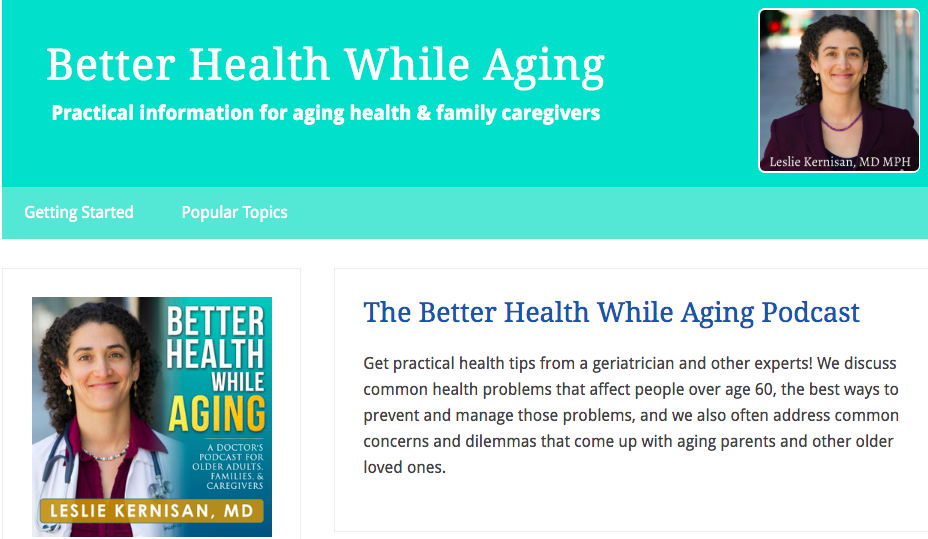
Much of what I say here will be things I learned from this excellent, excellent podcast. Yes I said excellent twice. Free, relevant, wonderful information, in entertaining recordings you can listen to anywhere. Or you can just read it, if you prefer.
Lesson 2: People are living a lot longer than when you were a kid
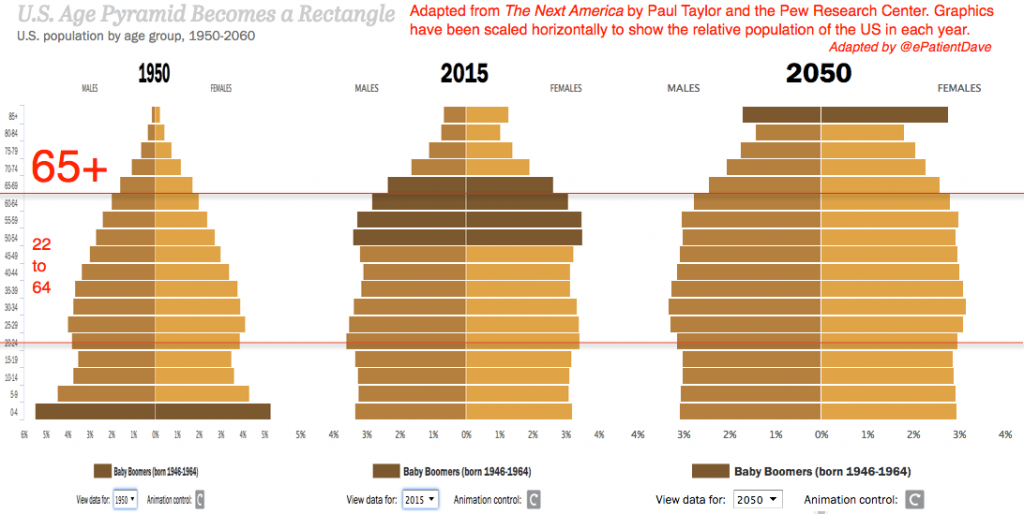
This graphic is explained in my blog post about turning 65.
Lesson 3: The Beers List
Medications that shouldn’t be used the same after 60
No, you snarky people, the Beers List isn’t about pub menus. Dr. Mark Beers was a great guy who figured out that some medicines should be discontinued or used much more carefully, because Second Puberty. (No he didn’t call it that.) And he made a list, which gets updated every few years.
When I ask doctors about the Beers List, most of them get a look like “Um, yeah, I heard about that once.” Don’t blame them – they have tons of things to stay on top of! But you should invite discussion of the Beers List.
Lesson 4: Most health professionals weren’t trained much in geriatrics. Oops.
Better Health While Aging’s host Dr. Kernisan says there are only 7,000 board certified geriatricians in the US. At the start of every episode she defines geriatrics as
…the art and science of modifying healthcare so it works better for older people and the people who care for them.
So now consider that most care providers have not been trained much in how to do that! Your takeaway: there’s plenty of reason for you to learn as much as you can.
Lesson 5: Prepare to avoid falls when you’re eventually old
For most of your life, the little muscles that help you not fall over have taken care of themselves. When you get older, they get lazy. Fortunately they respond to wake-up calls – even if you’ve never been an exerciser.
Tip: a lot of people’s final decline starts with a fall. You don’t need to be old and frail for this to happen.
The YMCA’s “Enhance Fitness” program is an evidence-based program that strengthens the little muscles (and big ones) that help you maintain balance. I’m not old yet but I’ve already found it so helpful I’ve gone back to repeat it three times!
Lesson 6: Avoid polypharmacy.
That’s what they call it when you have lots of medications. The more meds you take, the greater the chance they’ll conflict with each other. Two modern factors worsen this:
- Individual providers, all under time pressure, may not be aware of all the meds you take. You and only you must be responsible for each provider knowing your up-to-date list. Otherwise they can’t do their job.
- Related: Individual providers may have no clue how many other doctors you see, and thus may have no idea why you’re taking a medicine … and they may jump to wrong conclusions! (I take a pill for a finger tremor, but it’s normally used for a heart condition. I don’t have that condition!)
In any case, unexpected interactions between meds can cause numerous side effects (cognitive problems, heart problems, balance problems, you name it) that can make your life miserable. Do what you can to avoid that!
There’s lots more to say about this, but suffice it to say that when a trained geriatrician steps in, one of the first things they may do is check whether all your meds are still needed. If they are, you keep ’em; if not, they can be discontinued (“deprescribing“), and sometimes problems disappear!
At its root, polypharmacy is a consequence of poor care coordination, which is aggravated by our fragmented medical records systems. You can absolutely help by making a point of monitoring the list of all meds and their interactions – including over-the-counter.
Lesson 7: Movement is life.
I first heard that from Dr. Howard Luks, the superb orthopedist who did my wife’s double knee replacement, which was spectacularly successful. (Read the story, see her video clips.) Note: he’s two states away from us, but we were able to use him because we have single-payer Medicare: there’s no such thing as out-of-network. This is good – choice is good – freedom to reward good providers is good!
There will be much more to say about “movement is life,” but here’s the unscientific way I sum it up in my thinking:
When your body keeps moving, something inside says “Well, it must not be time to get old and die yet. Let’s keep things running.”
So, go for walks. Or move your arms. Or go bowling. Or stand up for a few minutes now and then. Just don’t let the primitive “are we dying yet?” part of your system get the idea “Yep, must be dying, because we’re not chasing food anymore.” Moving muscles send your system a “keep going” message.
Lesson 8: Sleep, glorious sleep.
I’ve never been one to sleep long, so this one isn’t automatic or easy for me, but: did you know sleep actually helps keep your DNA from falling apart? How fun is THAT? It means you’re totally being sensible if, at bedtime or morning, you LET GO OF EVERYTHING ON YOUR MIND and sleep more.
“Let Patients Help” in a few easy lessons
Many thanks to e-patient and film producer Kistein Monkhouse for taking my book Let Patients Help and, in a dark and secret studio in Brooklyn, recording eleven short videos. You can “binge watch” them – each one will automatically link to the next one. e-Patient basics in fifteen minutes!
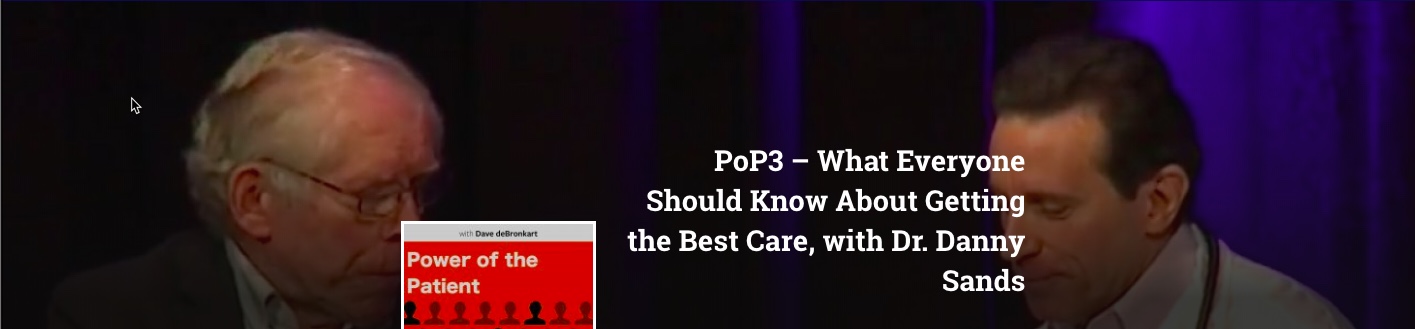 I’ve just posted Episode 3 of my new podcast, “The Power of the Patient.” Click on over, and catch up on Episodes 1 and 2, if you’re new here. Here it is: What Everyone Should Know About Getting the Best Care, with Dr. Danny Sands.